
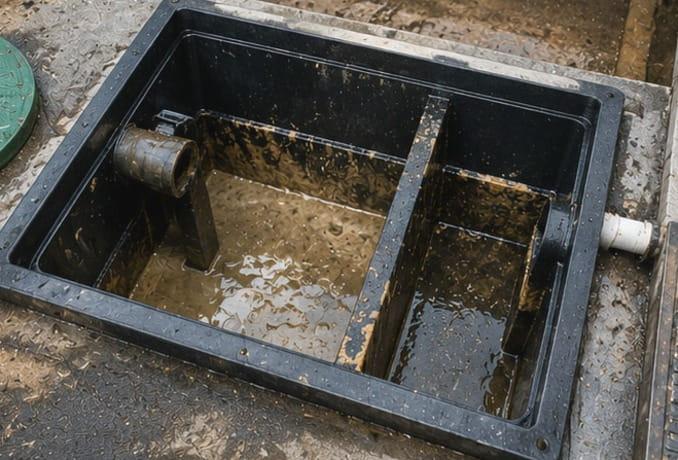
Grease interceptor cleaning helps commercial kitchens manage the buildup of food waste, oils, grease, and fats that collects inside large interceptor systems. Unlike smaller grease traps, grease interceptors are designed to handle higher wastewater volumes from restaurants, cafeterias, hotels, schools, hospitals, and other food service facilities. As material builds up over time, the interceptor gradually loses capacity, making routine cleaning a vital part of regular property maintenance. During the service, the contents of the interceptor are removed, accumulated residue is cleaned from the interior walls and components, and the system is inspected for visible buildup that could affect proper operation. Regular grease interceptor cleaning supports steady wastewater flow, helps reduce unpleasant odors, and lowers the chance of grease-related plumbing problems that might disrupt daily kitchen activities. Scheduling service at appropriate intervals also helps keep the interceptor ready for continued use throughout changing business demands.
Regular maintenance schedules vary depending upon the size of the interceptor, the amount of food prepared, and the volume of wastewater produced each day. Facilities with busy commercial kitchens often require more frequent grease interceptor cleaning to prevent excessive accumulation from developing between visits. Cleaning removes grease layers, settled solids, and floating waste before they occupy too much of the interceptor's available space. This service is suitable for independent restaurants, chain locations, institutional kitchens, supermarkets, event venues, and many other commercial properties that rely on interceptor systems. Experienced service technicians use specialized equipment to remove waste, clean the interceptor thoroughly, and leave the unit ready for ongoing operation. Staying on top of grease interceptor cleaning can help businesses avoid unnecessary downtime, maintain cleaner plumbing systems, and support consistent kitchen operation throughout the year while reducing problems associated with heavy grease buildup.